

Peer-reviewed journal articles, newest first · 73 papers. Also on Google Scholar and ResearchGate.
2026
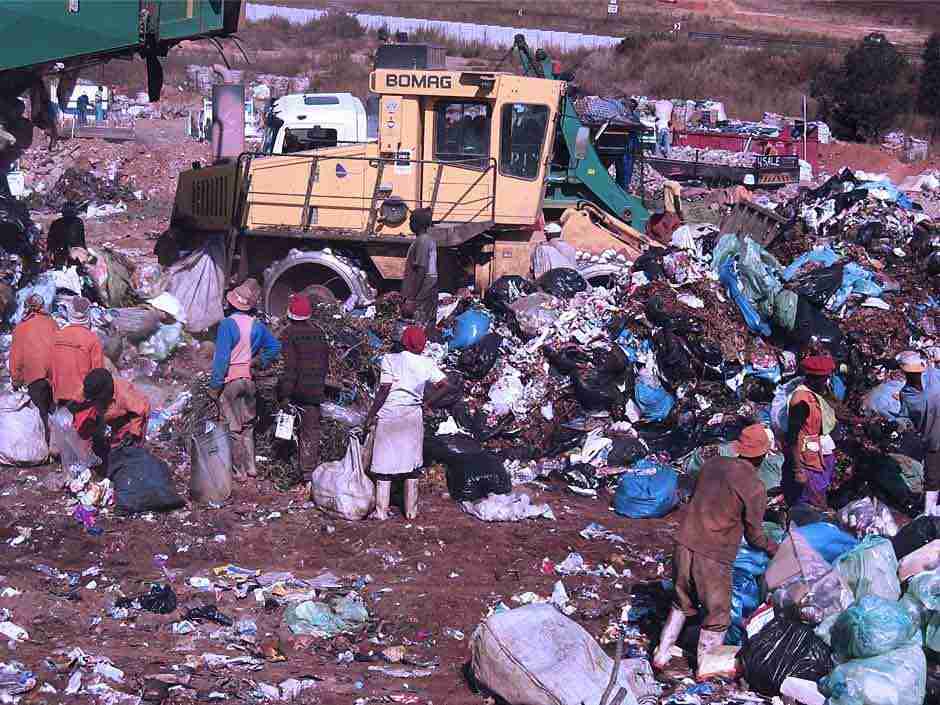
Beyond Awareness and Enforcement: Governance and Infrastructure Constraints Shaping Illegal Dumping in Ngwelezana Township, South Africa
Illegal dumping is a significant environmental and public health challenge in South African townships. This study investigates the drivers of illegal dumping in Ngwelezana Township, KwaZulu-Natal, using a qualitative…

Local power dynamics of rural water supply in Bambili, Northwest Cameroon
The provision of safe, affordable and reliable drinking water to communities is a basic human right, as access to sufficient potable water is essential for sustaining a healthy life and human dignity. However, despite…

From mining consideration to mindful tourism in Melmoth, KwaZulu-Natal, South Africa: reimagining sustainable futures

Community-led development and community-based natural resource management: best practice in Sub-Saharan Africa
Rural Community Development is a course of action aimed at developing communities and improving living standards. If steered by community members, then community development can leverage social networks, strengthen…

Uniting against a mining giant: Bridging class and race for environmental justice
Despite existing political ecology research on conflict and resistance, there is a gap of understanding in how class, race, and networking alliances are formed and sustained, and operate effectively. In the context of…

Contested authority and community resistance in extractive contexts: The case of Melmoth, South Africa

Constraints to Reflexive Governance of Sand Mining by State Institutions in Zimbabwe
Illegal sand mining continues to cause severe social and environmental degradation in Zimbabwe despite legal frameworks intended to regulate the sector. This qualitative case study of Harare Metropolitan Province…

A social-ecological resilience and justice framework for mega-port expansions in the Global South: The case of the Port of Durban, South Africa
As Global South nations pivot toward “Blue Growth” strategies, exemplified by South Africa’s Operation Phakisa, tensions between industrial port expansion, estuarine conservation, and coastal livelihoods have…
2025

A gender-inclusive approach to enhancing food security through the circular economy in the Eastern Cape, South Africa
The circular economy is recognized as a way to ensure sustainable economic and environmental systems. One aspect is reducing waste by reusing it in a manufacturing or processing plant. In agriculture, circular…

Investigating the co-management of natural resources: Lessons learned from the iSimangaliso World Heritage site
Co-managed protected areas globally provide economic and environmental benefits through an equal partnership with communities. However, the African context of natural resource co-management differs, necessitating…

The role of civil society and good governance in effective air quality management in the South Durban Industrial Basin

‘Tourism politics and mobilities: re-imagining equality and inclusion in Southern and West Africa’s urban tourism governance’

Mining Extractivism, Climate Stress, and Water Injustice: A Case Study of the Proposed Jindal Iron-Ore Mine in Melmoth, KwaZulu-Natal and Hydrosocial Justice
In water-stressed regions of South Africa, the expansion of extractive industries is compounding the effects of climate change and poor governance, threatening local water security and socio-ecological resilience for…

Unearthing Middelburg’s geological treasures for cultural and economic growth
Rural towns have significantly contributed to local and regional development. Geoheritage and geotourism are catalytic niche areas for local development. This paper contributes a geohistorical and geoheritage…
2024

Inventory of geoheritage sites in the Kruger National Park, South Africa
The inventory of geoheritage is important for the geoconservation, management, and public awareness of geoheritage sites. Due to the limited focus on geotourism research and inventory of geoheritage sites in Africa, it…

Examining Water Efficiency Measures for Three- to Five-Star Graded Game Lodges and for Residential Beneficiation in Hammanskraal, South Africa

Examining local community socio-economic benefits derived from community forest programmes in Namibia
Although academic debates since the 1990s have focused on the outcomes of community forest management interventions these debates have not been widespread within the African context.Literature on a hybrid business model…

Unravelling the Factors Behind Illegal Dumping in Townships

Envisioning the future in the light of climatic and non-climatic riskscapes

Analysis of Urban Households’ Preparedness and Municipal Interventions to Build Flood Resilience in Durban, South Africa: Implications for SDG 11
In Durban, South Africa, heavy rainfall leading to flooding has become more frequent over the past decade, resulting in devastating consequences for households. However, studies in South Africa have predominantly…

Socio-environmental impacts of mineral mining and conflicts in Southern and West Africa: navigating reflexive governance for environmental justice
2023

Farmers’ Perception of Soil Erosion and Degradation and Their Effects on Rural Livelihoods in KwaMaye Community, KwaZulu-Natal, South Africa
KwaMaye community in KwaZulu-Natal, South Africa, has, for decades, suffered from severe environmental degradation partly due to soil erosion. Yet, no study has analysed farmers’ perception of environmental challenges…

Climate change, mining development, and residential water security in the uMkhanyakude District Municipality: a double catastrophe for local communities
Academic research on mining and climate change and associated impacts on water resources particularly for the developing world has been limitedly explored. Climate change is expected to make water insecurity in rural…

Geoheritage Threats in South African National Parks
The uniqueness and potential of South African geoheritage to contribute to sustainable development is undoubtedly unmatched. However, little is known about the geoheritage threats in South Africa because geoheritage…

Proposed governance model for geotourism and geoheritage in South Africa and the implications for Africa
2022

Doing tourism in Southern Africa amid the coronavirus pandemic: Navigating political, socioeconomic and environmental inequalities
The purpose of this paper is to ignite a conversation on the challenges of the ongoing ‘novel’ surrounding the coronavirus (SARS-CoV-2) pandemic in the Southern Africa region. The global COVID-19 pandemic started with…

Climate Change Impacts and Challenges of Combating Food Insecurity in Rural Somkhele, KwaZulu-Natal, South Africa
Climate change poses immense challenges for food security in most developing countries. The extent to which residents are able to reduce their impact on food resources and adapt to climate change will have implications…

Exploring Strategies for Management of Disasters Associated with Abandoned Mines and Illegal Mining
2021

Ecological Conflicts, Resistance, Collective Action and Just Resilience: What Can We Learn from a Community Struggle Against a Proposed Coalmine in Fuleni, KwaZulu-Natal, South Africa
South Africa’s adopted neoliberalism framework, since democracy, has spearheaded industrial development such as mining and has contributed to eroding civil society formations for environmental justice. Although civil…

A methodology for examining Geotourism potential at the Kruger National Park, South Africa

Examining reflexive scientisation and scientific expertise in South Durban, South Africa
Although the significance of scientific expertise is often proposed and empirically illustrated in academic literature, it is still unclear how environmental expertise becomes authoritative, and how its legitimacy can…

The Contribution of Geotourism to Social Sustainability: Missed Opportunity?

Challenges of Geotourism in South Africa

‘The future looks empty’: embodied experiences of distress triggered by environmental and climatic changes in rural KwaZulu-Natal, South Africa

Conditions and Constrains for Reflexive Governance of Industrial Risks
2020

Strengthening the scaffolds of community flexibility: policy and institutional response to the rural water supply and sustainability challenge.
Inadequate water supply is one of the greatest current and growing global challenges particularly in rural communities of the developing world. Part of the challenge has been the ineffective water legislation and…

Developing a scale for measuring influential factors towards geotourism development

Subsistence farmers’ differential vulnerability to drought in Mpumalanga province, South Africa: Under the political ecology spotlight
This paper examines social differences and drought vulnerability among subsistence livestock farmers in Mpakeni, Mpumalanga province, South Africa. This paper asks, how do social differences between households and power…

Tourism Governance and Attainment of the Sustainable Development Goals in Africa
Inclusiveness that improves tourism governance is significant for development if benefits from tourism are distributed equitably. Declaration of 2017 as the International Year of Sustainable Tourism and adoption of the…

The nexus between tourism and urban risk: Towards inclusive, safe, resilient and sustainable outdoor tourism in African cities

Theorising Indigenous Farmers’ Utilisation of Climate Services

“Obstacles to and suggestions for successful township tourism in Alexandra Township, South Africa”

An operational framework for communicating flood warnings to indigenous farmers in southern Nigeria: a systems thinking analysis
2019

Examining governance and growth of the hotel sector in Malawi: An environmental metabolic rift perspective

Examining civil society social capital relations against mining development for local sustainability
Abstract South Africa presents a unique case for mining development and impacts on sustainability because the lines between the mining industry and the state are unclear and due to the increasing inequality between…

‘Does the poor matter’ in pro-poor driven sub-Saharan African cities? toward progressive and inclusive pro-poor tourism.
Purpose The purpose of this paper is to question the extent to which Sub-Saharan African cities are progressing towards promoting pro-poor economies through pro-poor tourism (PPT). It specifically examines how African…

Traditional leadership, community participation and mining development

When Race and Social Equity Matters in Nature Conservation in Post-apartheid South Africa
2018

Examining governance and collaboration for enforcement of hotel greening in Gauteng, South Africa: Towards a network governance structure

Integrating Service Quality as a Second-Order Factor in a Customer Satisfaction and Loyalty Model.
Purpose The study conceptualizes service quality as a second-order factor and analyzes its influence on customer satisfaction, perceived value, image, consumption emotions and customer loyalty by testing a structural…

Converging political ecology and environmental justice disciplines for more effective civil society actions against macro-economic risks

Exploring the Impacts of Mining on Tourism Growth and Local Sustainability
Abstract Mining licenses in post‐apartheid South Africa are being granted by the ruling government in sensitive areas that are important tourism hubs and employment generators. Limited research has been conducted to…

Mining Corporations, Democratic Meddling, and Environmental Justice in South Africa

Bridging social and environmental risks: the potential for an emerging environmental justice framework in South Africa
Whereas anti-apartheid social movements engaged collectively against a repressive regime, especially in actions against social injustices, post-apartheid civil society has witnessed fragmentation when it comes to…
2017

Governance, participation and mining development

Environmental Impact Assessments and public participation: The case of environmental justice and mining development
South African democracy witnessed considerable effort to redefine Environmental Impact Assessment regulations to improve participation of citizens towards sustainable development activities. Unfortunately, the…
2016

Challenges facing tourist attractions due to acid mine drainage in the West Rand, Gauteng

Barriers towards African youth participation in domestic tourism in post- apartheid South Africa

Mining and/or tourism development for job creation and sustainability in Dullstroom, Mpumalanga
Although the tourism sector has greater potential for job creation than the mining sector, the debate on which sector may be more sustainable for employment and local social development, has not been extensively…
2015

Exploring obstacles towards township tourism growth for poverty alleviation and job creation in Alexandra Township, Johannesburg

Exploring potential challengers for first year student retention and success rates

Examining the quality of carbon trading as pathway to environmental justice or recipe for disaster at the Bisasar landfill in Durban, South Africa
2014

Participatory democracy against industrial risks: Environmental justice in Durban, South Africa
Under Apartheid, marginalised groups had limited power to influence decisions contributing to environmental injustices. Democracy witnessed civil society as ‘inclusive’ to engage in formal decision-making. This paper…

The network society, power and the print media in post-apartheid South Africa
Although post-apartheid South Africa has witnessed constraints on press freedom by the ruling party, there is limited understanding of how media discourse is contested and constructed by diverse social actors. This…

Characterising civil society and its challenges in post-apartheid South Africa
Since South Africa’s transition to democracy, civil society has been considered a critical component of new inclusive “democratic” societies, acting to ensure human rights for all. Government and donor agencies require…

Greening within the Johannesburg tourism and hospitality sectors

Reconsidering the ‘risk society theory’ in the South: the case of civil society actions against a proposed industrial risk facility in Durban, South Africa
This paper draws on the theoretical framework of German sociologist Ulrich Beck's ‘risk society theory’ of reflexiveness to assist in understanding civil society response to industrial risk in Durban, South Africa. The…
2013

The relationship between the conservation agenda and environmental justice in post-apartheid South Africa: An analysis of WESSA KwaZulu-Natal and environmental justice advocates
The idealization of the natural environmental as a virtual garden of Eden during colonization and apartheid in South Africa has continued to influence mainstream conservationists focusing purely on nature – excluding…

Tackling Climate Change in Africa: Effective or Rhetoric Interventions?
2012

Another political ecology of civil society reflexiveness against urban industrial risks for environmental justice: The case of the Bisasar landfill, Durban, South Africa
The concerns of political ecology since its beginnings as a field have been predominantly set in rural areas with limited focus on urban industrial risks. Further, debates on the global South (often from Anglo‐American…
2011

Leadership against industrial risks: Environmental justice in Durban, South Africa
This paper examines the ability of civil society leaders in Durban, South Africa to champion environmental justice in an industrial risk society. It presents viewpoints from key social actors at the Durban city level…
2010

Mobilization and Protests: Environmental Justice in Durban, South Africa
This paper examines the ability of civil society actors to champion environmental justice in an industrial risk society in South Africa by way of mobilisation and protest action. This paper presents viewpoints from key…

Civil society response to industrial risk: the case of Durban, South Africa
This paper seeks to map the extent to which civil society actors champion environmental justice in an industrial risk society. It examines the role of civil society actors in Durban, KwaZulu-Natal, in being able to…